

Redesigning Spotify
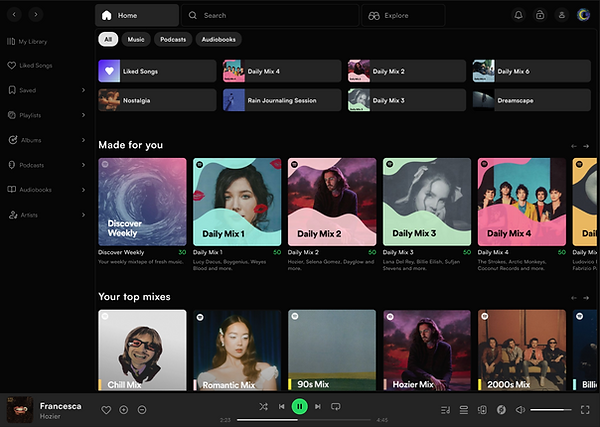
This is my attempt at redesigning Spotify's User Interface using Figma, aiming to improve the accessibility, usability and aesthetic coherence.

Overview:
Redesigning the music streaming experience of Spotify to improve content discovery, reduce cognitive overload, and create a more personalized listening journey.
This project focuses on simplifying navigation, improving the home experience, and making music exploration feel more intuitive and less algorithm-heavy.
Problem Statement:
Spotify is powerful, but not always easy.
Users often feel:
-
Overwhelmed by excessive content on the home screen
-
Disconnected from truly personalized recommendations
-
Frustrated navigating between music, podcasts, and playlists
Research across redesign case studies shows users struggle with navigation clarity, discoverability, and relevance of content.
Core Problem:
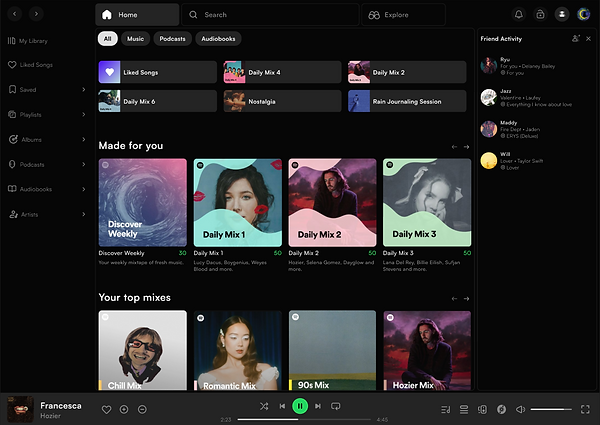
How might we make music discovery more intuitive, relevant, and user-controlled without overwhelming the user?
Research & Insights
Key Observations:
-
Users rely heavily on Home, but it feels cluttered
-
Discovery is algorithm-driven but not always accurate
-
Too many elements → decision fatigue
-
Music vs podcasts → lack of clear separation
Users don’t want more options
They want better, faster decisions
Challenges:
-
Content Overload
-
Too many sections competing for attention → weak hierarchy
-
-
Poor Personalization Perception
-
Users feel recommendations are repetitive or generic
-
-
Navigation Complexity
-
Switching between features (search, library, discovery) feels fragmented
-
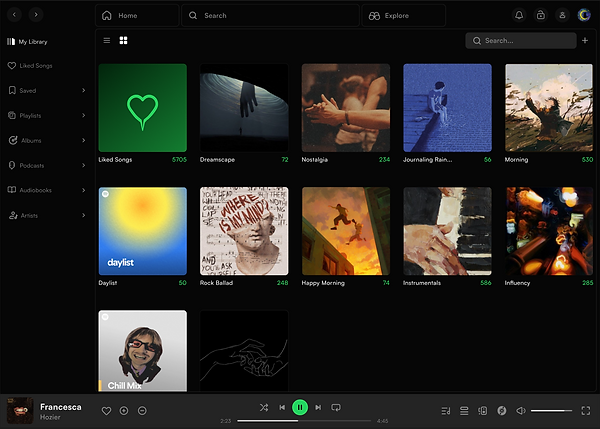
Solutions:
-
Simplified Home Experience
-
Reduced visual noise
-
Prioritized most relevant content
-
Introduced structured content blocks
-
-
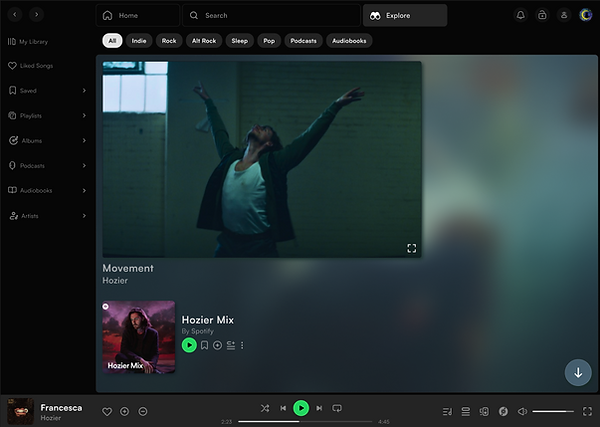
Mood-Based Discovery
-
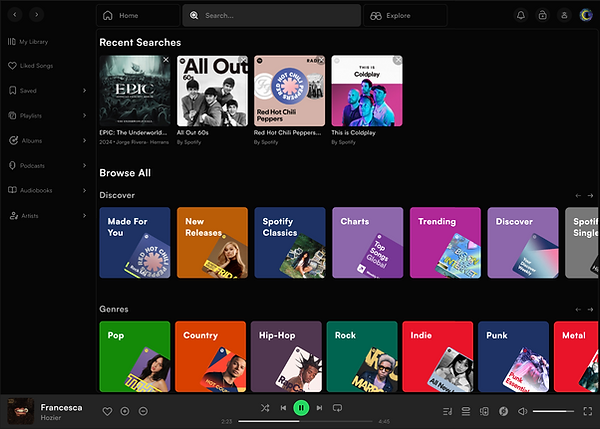
Quick entry points based on intent (mood, vibe, activity)
-
Faster decision-making vs endless scrolling
-
-
Improved Content Hierarchy
-
Clear distinction between music, podcasts, and playlists
-
Better grouping and visual separation
-
-
Personalization with Control
-
User-driven customization
-
Ability to influence recommendations
-
Information Architecture:
Before:
-
Flat, cluttered structure
-
Mixed content types
-
Weak prioritization
After:
-
Structured hierarchy:
-
Home (personalized + mood-based)
-
Search (intent-driven)
-
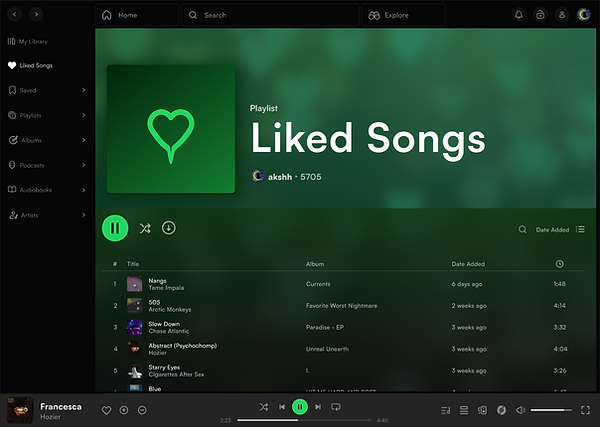
Library (organized + controllable)
-
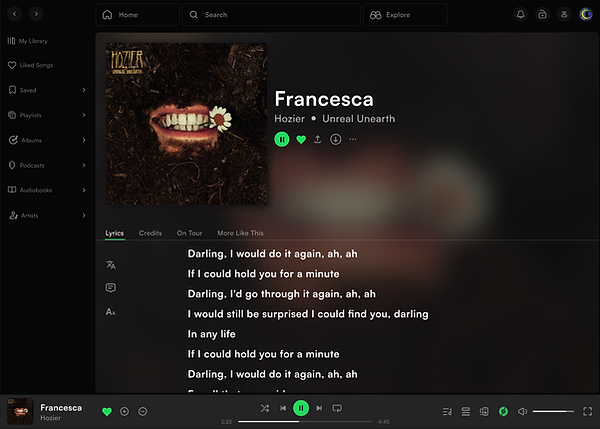
Focus: Reduce thinking, increase flow
Impact (Conceptual)
-
Faster decision-making
-
Reduced cognitive load
-
Improved content discoverability
-
More personalized experience
What I Learned
-
Simplicity is harder than adding features
-
Personalization needs user control, not just AI
-
Visual hierarchy = usability
-
Good UX reduces thinking, not just clicks
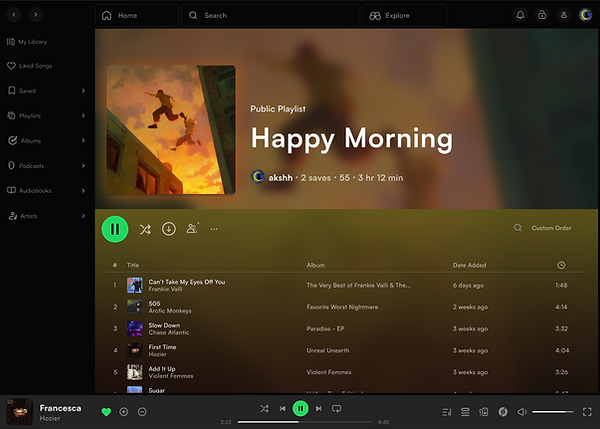
Output
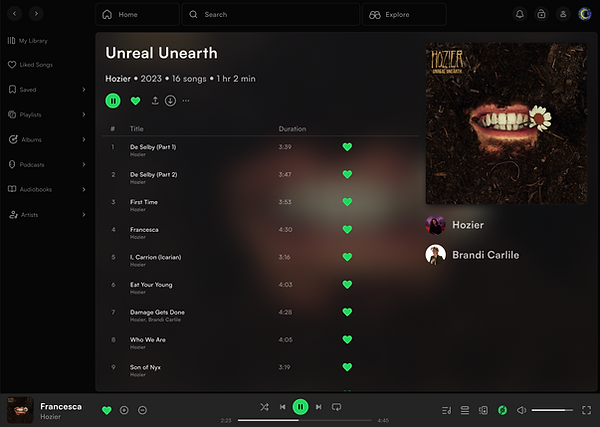
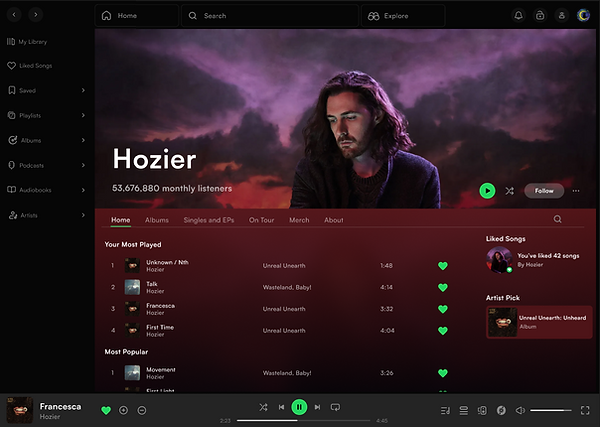
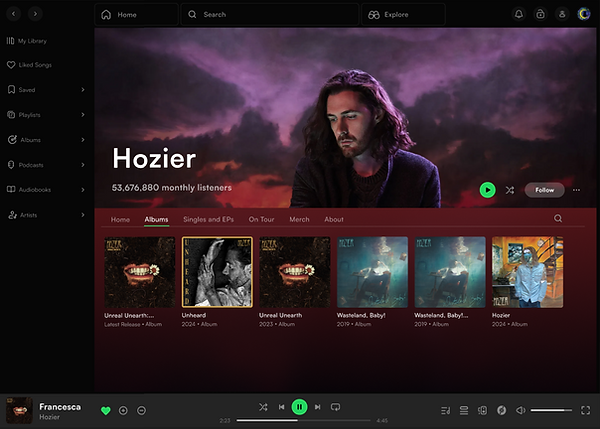
The final outcome is a streamlined, user-centric Spotify experience focused on clarity, speed, and meaningful discovery.
The redesign transforms Spotify from a content-heavy interface into a guided, intent-driven experience that helps users find what they want, faster and with less effort.
Experience Transformation:
Before:
-
Cluttered home feed
-
Overwhelming number of choices
-
Passive, algorithm-heavy discovery
After:
-
Focused, structured interface
- Faster decision-making
- Intent-driven and user-controlled discovery
Outcome Summary
The redesign results in:
-
Reduced cognitive load
-
Faster access to relevant content
-
Improved discoverability
-
A more engaging and personalized listening journey